
Everyone loves a pat on the back. It feels good to be told we nailed it — whether it’s a successful client pitch, a clean report, or a compelling presentation. And yes, recognition matters A LOT.
But sometimes what matters more is the one person brave enough to say:
“This works for now, but have you thought about what happens in X scenario?”
It might feel like nitpicking. But what if it’s not?
At SJ Consulting, we have a name for this kind of input: petty feedback.
It’s the tiny, specific, seemingly insignificant suggestion — rephrasing a sentence for clarity, adjusting spacing on a slide, reconsidering a decision that technically works but may not scale. In the moment, these suggestions can feel trivial. But we’ve learned they’re anything but.

Over time, these “petty” interventions prevent big misunderstandings, system breakdowns, and communication hiccups. They’re like small course corrections that keep the ship on track.
Petty Isn’t Always Petty
When feedback sounds small, it’s tempting to brush it off. After all, what’s the big deal about a few extra clicks or a workaround that gets us through today’s task?
But here’s the thing: small cracks become big fractures.

A process that “technically works” today may break under pressure tomorrow. A shortcut that helps one person might hinder another. When we dismiss "small" feedback as annoying or over-detailed, we miss the deeper signal: someone sees something we don’t — yet.
Why We Embrace the Petty
Many teams avoid feedback until it’s absolutely necessary. But that delay turns a teachable moment into a difficult conversation.
We believe in giving feedback early, often, and gently. Not to criticize — but to calibrate. To level up, 1% at a time.
Here’s how we think about it:
-
Small feedback is low-stakes. It doesn’t come with pressure — just perspective.
-
Early feedback is protective. It heads off future rework and escalations.
-
Frequent feedback builds muscle. The more we do it, the easier it becomes to give and receive.
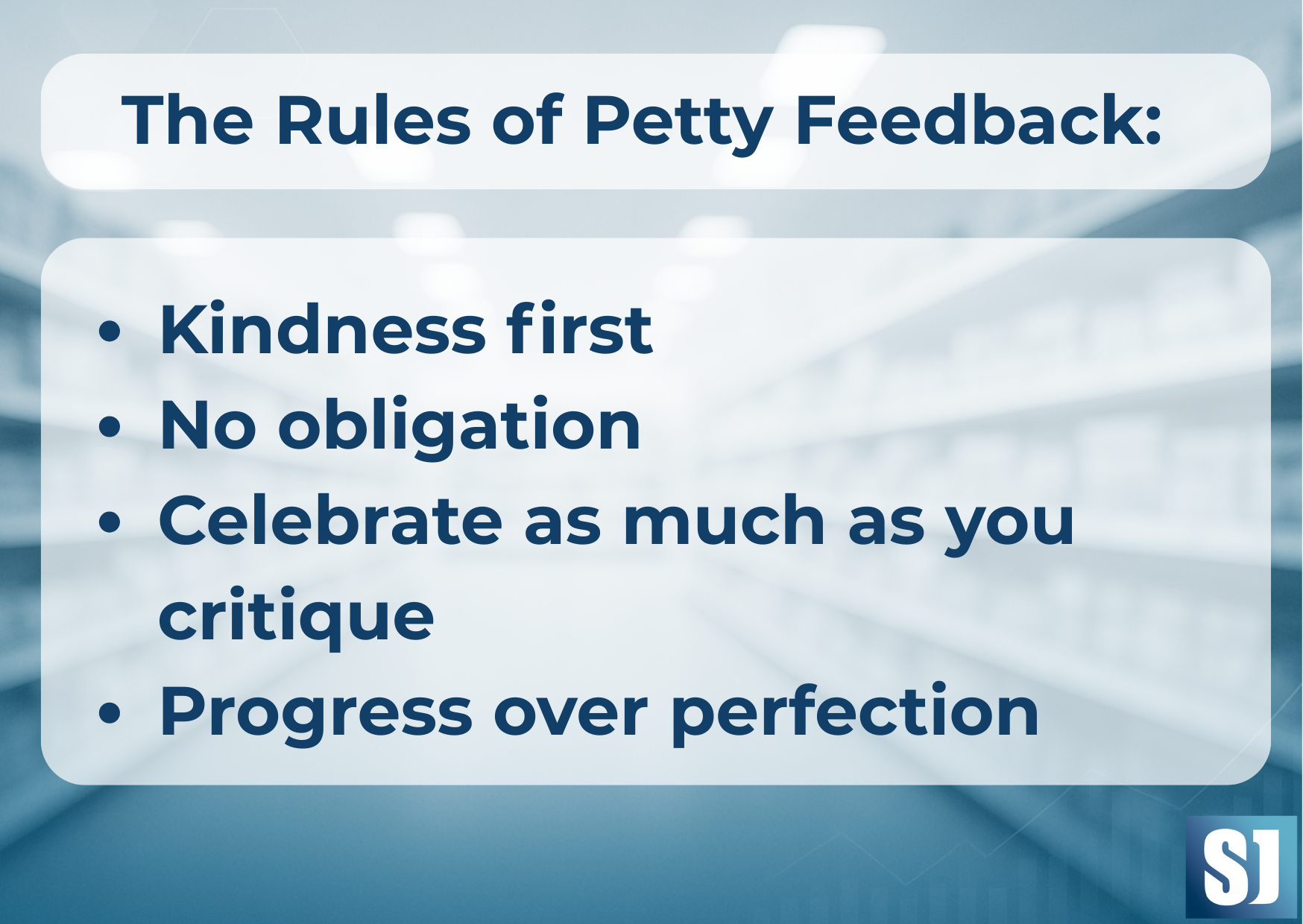
The Rules of Petty Feedback
For it to work, the culture around it matters. Ours is built on a few simple principles:
-
Kindness first – Feedback should be constructive and respectful. Always.
-
No obligation – Take it or leave it. The aim is to offer value, not enforce change.
-
Celebrate as much as you critique – Recognition matters just as much as suggestions.
-
Progress over perfection – It’s not about flawless execution. It’s about getting better together.
The Bigger Picture
When small feedback is normalized, it becomes part of the air a team breathes. It travels freely — from leadership to team members, peers to peers, and even bottom-up. It removes ego from the equation and replaces it with trust, curiosity, and shared ownership.
And here’s the kicker: those small moments compound.

Suddenly, the team moves faster. Documents are clearer. Systems are more scalable. And everyone feels like someone’s got their back — not because they were applauded, but because someone cared enough to speak up.
Final Thought
Don’t wait for the big problems to say something. The best feedback often sounds the smallest. Celebrate what’s working — and gently question what might not. That’s not nitpicking.
That’s leadership.

