
At SJ Consulting, we often describe ourselves as “systems psychologists” in the world of retail planning—navigating the complex interplay of logistics, finance, people, and technology. And if there's one phrase we’ve learned to trust more than any dashboard, metric, or meeting room certainty, it’s this one:

Short-Term Precision, Long-Term Trust
Taking the time to ask clarifying questions—“Is this SKU truly underperforming, or is the forecast suppressed by legacy constraints?” “Are these lead time deviations data issues or real supplier behavior?”—pays off not just later, but immediately. You make better decisions, avoid rework, and earn the confidence of clients and colleagues who see that your conclusions are grounded.
More importantly, over time, that approach builds organisational resilience. You’re not training teams to guess better—you’re training them to think better.
The False Comfort of Certainty
In retail and supply chain environments, pressure builds quickly: A late shipment, a misaligned forecast, an ERP hiccup that ripples downstream. In moments like these, it’s easy for planners, analysts, or even seasoned executives to default to assumptions. It’s understandable—we’re trained to provide answers - but premature certainty is often more expensive than temporary ambiguity.
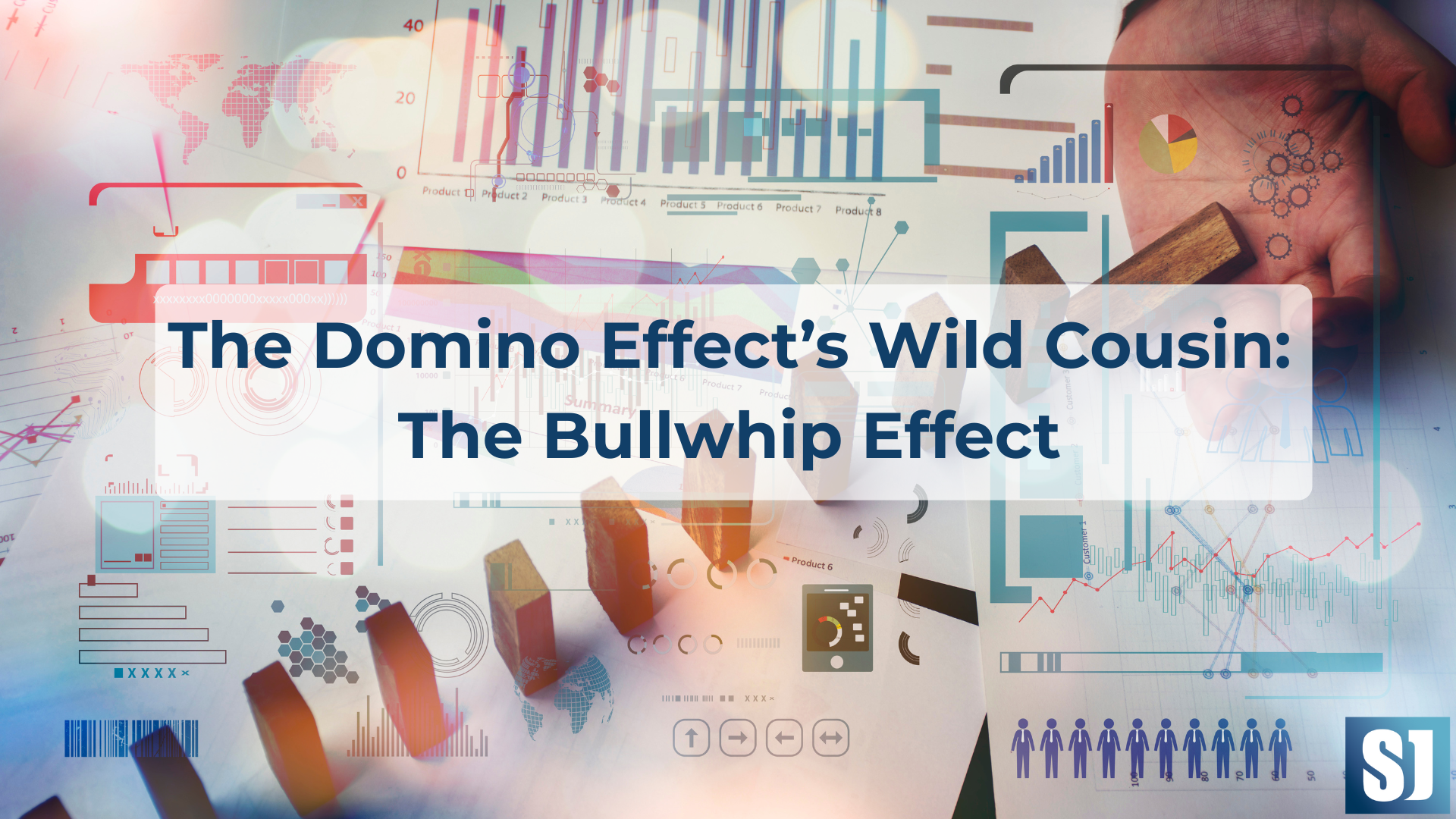
Systems—especially those spanning demand planning, inventory control, and financial forecasting—are interdependent and nonlinear. “The Bullwhip Effect” means that any small, wrong assumption at one node can propagate and expand into bigger, more costly decisions across the value chain.
The Courage to Pause
Saying “I don’t know” isn’t an admission of weakness. It’s an act of professional integrity. It signals to the team and to the system itself that we value accuracy over ego. It creates space for discovery.
It does not matter which tool you're working with, it could be replenishment logic in the planning systems, reconciling allocation balances in the ERP, or chasing the root cause of misaligned net profitability metrics, starting from not knowing leads you toward actually understanding.
The SJ Philosophy: Inquiry as a Discipline
At SJ Consulting, our value doesn’t lie in having all the answers upfront. It lies in helping clients ask sharper questions, challenge inherited assumptions, and co-design systems that reflect reality—not wishful thinking.

That might mean interrogating the logic inside a demand plan, or it might mean mapping the unspoken workflows that cause operational bottlenecks. But it always starts the same way:
“Let’s not assume. Let’s go find out.”
Because in systems psychology—and retail planning alike—humility is not hesitation. It’s precision.

