Saying, ‘I don’t know,’ built my career.
No, I am not exaggerating.
I have worked in consulting for decades and I come across the same rules, as unspoken as they may be, all the time: Have the answer. Speak with authority. Lead with certainty.
But in truth, real trust isn’t built in the moments when we know.
It’s forged in the gaps—the moments of uncertainty. The pauses between question and answer.
The space where someone says, “I don’t know… but I’ll find out.”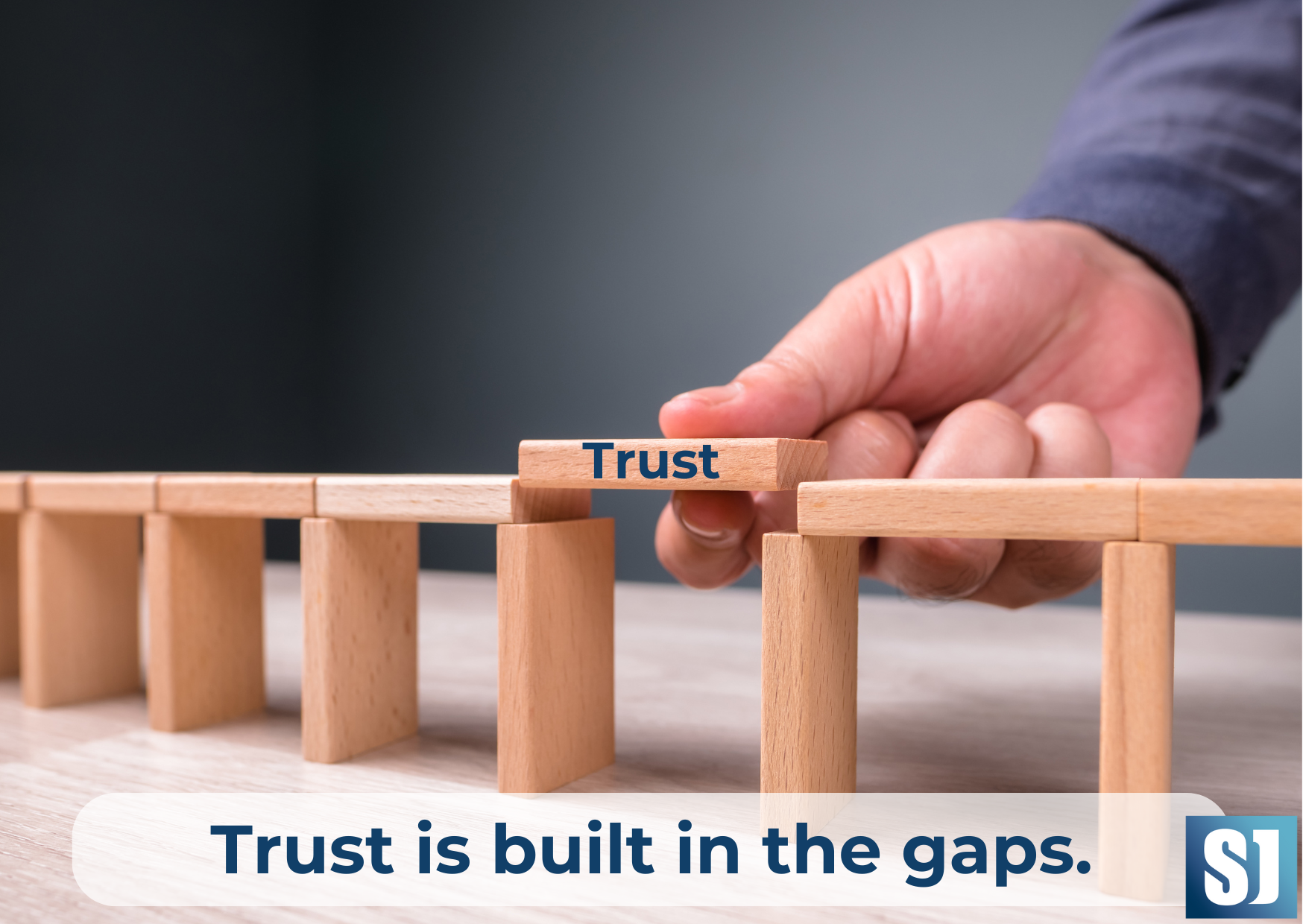
The “I Don’t Know” That Built My Career
Early in my career, I was working as a junior technical consultant on a four-week solution design project when two weeks in… the senior consultant I was shadowing had to step off the project.
It was unexpected, unavoidable, and completely out of everyone’s control. Mine, his, the firm.
I was the only option. I was now leading the project. It didn’t matter that I was still training on the system, still learning how the pieces fit together, and in no way feeling ready.
I was now responsible for steering the conversation.
I walked into a room full of client stakeholders with nothing but an agenda… and a whole lot of uncertainty.
They started asking good, in-depth technical questions.
And I didn’t have the answers.

I didn’t try to fake it. Instead, I was honest and I got really curious.
I asked thoughtful follow-up questions—not just to clarify, but to understand why the client was asking what they were asking, because if I didn’t understand the why, there was no way I’d deliver the right what.
After I pulled every bit of context I could from the client, I went into the code myself, I jumped on late-night calls with team members who knew more than I did, and I researched solutions as far as possible.
Internally, it was obvious I was in over my head—but my team backed me.
Externally, I over-communicated with the client every step of the way:
“We’ve hit a blocker, here’s how we’re approaching it.”
“We don’t have the answer yet, but this is what we’re doing to get it.”
The Outcome?
We saved the client relationship.
We delivered a working solution.
We avoided costly rework—for both companies.
And I became a better consultant because of it.
That experience taught me how to ask the real questions.
How to slow down and listen for what mattered.
How to lead with empathy—not ego.
And it didn’t stop there.
That moment, where I chose honesty over performance, became a defining shift in my career.
I went on to become a senior consultant at a very young age and it wasn’t because of the client like you may be thinking - it was because the company and all my mangers now knew I would be honest even when that honestly didn’t seem convenient. It also showed how hard i would work for my clients.

Soon I was managing my own clients across multiple countries and I earned the trust of global brands. I was asked to lead, to guide, and eventually - I started my own company.
All because I stayed in the gap, asked better questions, and earned trust the right way.
The Lesson
I didn’t “fake it till I made it.”
I was honest from the start—and that honesty made the project successful.
It made me successful.
Today, as a founder, I bring that same mindset to every engagement.
Because I’ve learned: trust doesn’t grow from pretending.
It grows from how you show up when you don’t know.
My team and I believe in showing up with curiosity and transparency.
That means being real about what we do know—and honest about what we don’t.
When we find a gap, we don’t fill it with spin.
We fill it with action.
With accountability.
With communication.
Because in our experience, trust isn’t built by never dropping the ball.
It’s built by how you handle the bounce.


